

Welcome to my project home – smarthome.exposed
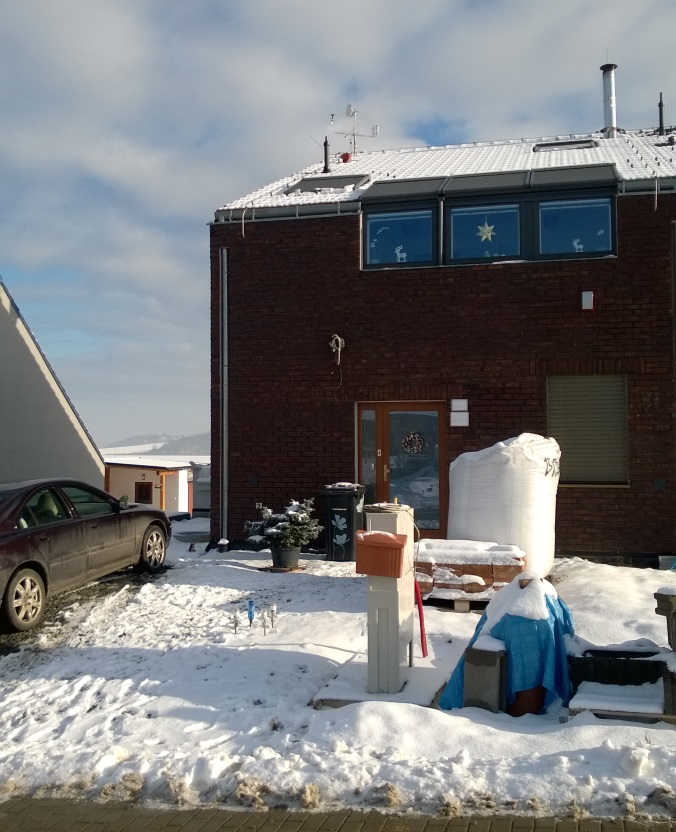
It all started with a simple plan to build a house. Having previously renovated an old apartment from scratch, I thought I knew exactly what to expect. During construction, there are a myriad of areas where you can spend your money, and initially, an “intelligent installation” wasn’t even on my priority list. In fact, all the electrical wiring was originally planned the conventional way.

However, as I added more features, the complexity of controlling them began to grow. What started with simple hallway and stairway lighting quickly expanded to LED night lights, bathroom fans, blinds, roof shutters, hot water recirculation, garden irrigation, and alarm systems. That long list forced me to rethink how to integrate everything into a cohesive system.
The Search for Knowledge
Back in 2014, I was eager to gather as much information as possible to find the best way to implement a smart home infrastructure. At the time, the official Loxone forum was my primary resource.
Unfortunately, on September 4th, 2015, the forum was closed -a move I believe was a major mistake. Since then, the Loxone community has fragmented across various platforms. Over the years, many friends embarking on their own smart home journeys have come to me with questions about challenges I had already solved. I created this site to share my stories, tips, and tricks to help others with their own implementations.
Tech Corner: Beyond the Box


What started with simple “crazy ideas” has evolved into a deep dive into custom home automation. This site is dedicated to the solutions you won’t find in a manual – customized hardware, software tweaks, and the technical “magic” that makes a house truly intelligent.
You’ll find everything here: from my classic Smart Mailbox (which still emails me a photo of the postman) to advanced Modbus RTU integrations for solar inverters. Whether it’s building a Local Weather Emulator, integrating Shelly Plug or Velux windows, this is where I share the “how-to” for the endless possibilities of a DIY smart home.
Exploring the Possibilities

Below, you’ll find the core areas I’ve implemented. You will notice how these systems overlap and interact; a sensor planned for one purpose can often serve many others. For example:
- Motion Sensors: Typically used for alarms, these can also trigger subtle night lights
- Wind Sensors: While protecting your canvas awnings, they can also tell your sprinklers to stay off so you don’t accidentally water your neighbor’s garden on a windy day. I’ve implemented Ultrasonic Weather Stations (Fengtu WQX7) that have no moving parts to wear out.
- Intelligent Energy Management: With the addition of a photovoltaic system, the house now acts as its own utility manager. It balances solar production with Wattsonic inverters, strategically diverting surplus energy to the Softub or the EV wallbox to ensure we never waste a kilowatt or pull from the grid unnecessarily.

Custom Solutions & Tweaks
Are you looking for something beyond “out-of-the-box” functionality? I love exploring customized solutions and unique tweaks. A few examples of what I’ve built include:
- The “Smart” Mailbox: Notifies you when mail arrives and can even email you a photo of the person who delivered it.
- Proprietary Hardware Integration: From photovoltaic inverter Modbus RTU protocols for Wattsonic to creating local emulators for Loxone’s Weather Service, I focus on keeping the “brain” of the house local and independent of expensive cloud subscriptions.
- The Status Dashboard: Provides a quick “status check” of the house before you leave, confirming that all windows are closed and the garage is shut.
Recent posts
- Softub energy efficiencyHave you ever wondered how energy efficient a Softub is, or how long it takes to warm the water up? Unlike most hot tubs, Softub has no dedicated heating element. Instead, it uses waste heat from the pump motor to warm the water, which is in a sense very clever design. On the other hand,…
- Softub water treatment: chlorine, bromine, or PHMG?A practical, real-world look at Softub water chemistry after testing chlorine-free PHMG and returning to dichlor. Covering maintenance, smell, pH stability, liner impact, and what actually works in a hot tub.
- Local Weather Service EmulatorLoxone’s official Weather Service is convenient, but it’s a paid and closed system. People typically bundle the purchase together with the Weather station, but that wasn’t the case back then. If you’re happy to manage your own forecast source (for example from a public API like MET Norway’s Locationforecast), you can emulate the official service…
- Fengtu WQX7 Ultrasonic Weather StationIn my previous post, I shared the challenges of finding a suitable replacement for my aging mechanical wind speed sensor. This post will share my experiences with the new ultrasonic sensor, including my observations, technical details, and insights that might be helpful if you encounter a similar situation. Comprehensive Weather Data with the WQX7 WQX7…
- Looking for ultrasonic wind speed sensorTraditional mechanical anemometers employ moving parts, which are susceptible to wear and tear, potentially leading to sensor failure. In contrast, ultrasonic wind sensors operate without moving parts, ensuring reliable and stable operation over the long term with minimal maintenance requirements. If you are considering an upgrade from a mechanical anemometer to an ultrasonic one like…
Recent comments
Great review! Your comparison of ultrasonic vs. pressure sensors is very insightful. The accuracy you achieved with the 0-10V sensor…
Great insights on Loxone AC control! Smart automation makes climate control so much easier. Thanks for sharing this detailed breakdown!
I confirm that modbus TCP via lan dongle works and there is no need to use RS 485 at all.
Looks like the filter location might have some impact too. I initially connected my filters at the shutters. By retrying…



It works in general, but at least with my M-TEC EB Gen3 (identical with Wattsonic) i have the strange effect,…